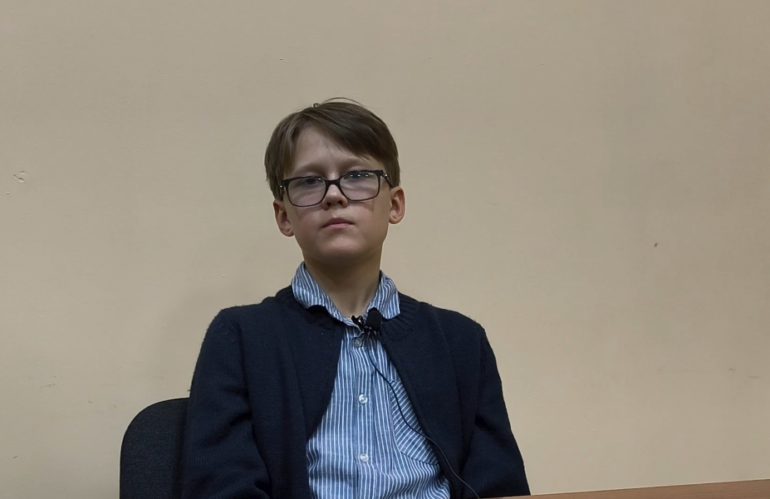
This is a story of courage, loss, and hope. Oleksandr is a teenager from the temporarily occupied city of Kherson, who fled with his mother through military checkpoints, leaving part of his family behind in order to escape the war. They started life from scratch in the town of Haisyn in central Ukraine — with no certainty about the future, but with remarkable inner strength. Despite the trauma of displacement, constant anxiety, and the need to adapt, Oleksandr persevered. Today, he is a top student in computer science, an academic competition winner who dreams of becoming a programmer and representing Ukraine at international contests. He believes that knowledge and talent can be powerful tools in the fight for a better future. His story is the voice of a generation learning to live and dream during wartime. The voice of a child who is changing the world.

Video story
🟦 1. WHO IS OLEKSANDR
Oleksandr is a 13-year-old boy from Kherson. Soon he will turn 14 — which means a passport and another step into adulthood. He currently lives in Vinnytsia, studies at a physics and mathematics lyceum, and dreams of becoming a programmer in the field of artificial intelligence.
💬 “My name is Sasha, I’m 13, almost 14. I’m from Kherson. Soon I’ll get my passport, but I’m not really looking forward to that day.”
🟩 2. CHILDHOOD BEFORE THE WAR: THE YARD AND A BICYCLE
Before the full-scale war, Oleksandr’s main association with home was his bicycle and the neighborhood where he rode with friends. It was his everyday life — school, the yard, movement, freedom.
💬 “I remember many things from home, but most of all how often I rode my bicycle around the neighborhood and played in the yard with friends.”
His family includes his mother, father, two grandmothers, two grandfathers, and a great-grandmother. It is a large circle of close relatives, some of whom still remain in Kherson.
💬 “I have a big family: me, my mom, my dad, one grandmother, another grandmother, two grandfathers, and my great-grandmother.”
🟥 3. THE START OF THE WAR AND THE DECISION TO LEAVE
At the beginning of the full-scale war, Oleksandr was in the fourth grade. What he remembers most about that morning is the tense atmosphere at home — the adults were very worried.
💬 “When the full-scale war started, I was in the fourth grade. I remember that morning well — the atmosphere at home was very tense, and my parents were the most worried.”
The decision to leave was made almost immediately, but they were able to implement it only when an opportunity appeared.
💬 “The decision to leave was made right away, but we left later, when there was a chance.”
Their belongings were packed in advance — they prepared to leave several times, but postponed the departure.
💬 “We prepared to leave several times and postponed it, so we actually had quite a lot of time to pack — our things were already packed and ready.”
When it became clear that this time they were definitely leaving, Oleksandr felt mixed emotions.
💬 “When I realized that we were definitely leaving, I felt joy, calm, and anxiety at the same time.”
🟧 4. THE ROAD FROM KHerson: HAISYN, UMAN, VINNYTSIA
The family did not leave together. Oleksandr’s father, grandmother, grandfather, and great-grandmother stayed in Kherson.
💬 “We didn’t leave as a whole family. One grandmother, my grandfather, my great-grandmother, and my dad stayed in Kherson. They are still there.”
Oleksandr often talks to them on the phone and misses his father very much.
💬 “I talk to them quite often on the phone. I miss my dad a lot, but he can’t come here.”
The journey to Vinnytsia happened in stages: first Oleksandr and his mother stopped in Haisyn, then considered Uman, but eventually chose Vinnytsia.
💬 “At first, we were just traveling and stopped in Haisyn, where we lived for some time, but we didn’t really like it. Then we chose between Uman and Vinnytsia — we spent one day in each. In the end, we decided to stay in Vinnytsia — we liked the city more.”
His first impression of the new city was calm and very rational.
💬 “The city seemed medium-sized to me — not small, but not very big either.”
🟦 5. SCHOOL, ONLINE LEARNING, AND THE MOVE TO THE LYCEUM
When the full-scale war began, Oleksandr, like many children, was already studying online.
💬 “At the beginning of the war, I studied online. It was like that almost until the end of the fourth grade, except for the last few months.”
After moving to Vinnytsia, he immediately started attending school offline — he didn’t want to stay in remote learning.
💬 “After moving to Vinnytsia, I immediately started attending school in person. I didn’t want to stay online — I wanted to go to school.”
At his lyceum, a new class was formed. Students came from different schools and cities, including internally displaced children. Everyone started from scratch.
💬 “We had a newly formed class — no one knew each other. Children came from different schools and cities, including displaced students, so everyone was on equal footing.”
🟪 6. FRIENDS, LYCEUM, AND ACADEMIC OLYMPIADS
In Vinnytsia, Oleksandr made new friends. Their conversations are not only about games or memes.
💬 “I have friends. We talk on the phone and solve various Olympiad problems together.”
The lyceum where he studies is a physics and mathematics lyceum, without division into specialized classes.
💬 “It’s a physics and mathematics lyceum. We don’t have separate ‘math’ classes.”
Oleksandr’s favorite subjects are physics, mathematics, and computer science. These are the subjects in which he participates in Olympiads.
💬 “I like physics, mathematics, and computer science the most. I take part in Olympiads in these subjects.”
He already has his first serious achievements at the city level.
💬 “This year I won first place in the city Olympiad in computer science, second place in physics, and fourth place in mathematics.”
Before the full-scale war began, he did not think he would become an “Olympiad student,” but he had always loved mathematics.
💬 “Before, I didn’t think I would become an Olympiad student. But I liked mathematics even then, and it came easily to me.”
The Teacher Who Inspired Him
A special role in Oleksandr’s life was played by his first computer science teacher, Petro Chuprun. It was he who introduced Oleksandr to the world of programming and supported his interest in the exact sciences.
💬 “I met him even before school, at a summer camp with a technical focus. He was a counselor. What impressed me was that he always spoke Ukrainian, even in Kherson, where it was rare. And also how sincerely he loved children,” Oleksandr recalls.
Petro Chuprun taught computer science at the very school where Oleksandr studied. After the start of the full-scale invasion, he went to serve as a combat medic and is now defending Ukraine on the front line.
His example inspires Oleksandr not only in his studies, but also in life.
🟦 7. A DREAM OF ARTIFICIAL INTELLIGENCE
Oleksandr is already thinking about his future profession, though he leaves room to change his mind.
💬 “I’ve already thought about who I want to become, but I’m not fully sure yet. I only know that it will be something related to mathematics and computer science.”
His current dream is programming in the field of artificial intelligence.
💬 “I think I want to become a programmer in the field of artificial intelligence.”
He is already learning programming and attends additional computer science clubs at the lyceum.
💬 “I’m learning programming and attend extra computer science clubs at the lyceum.”
Another big dream is to reach the International Olympiad level.
💬 “One of my dreams is to take part in the International Olympiad. The subject — math, physics, or computer science — doesn’t matter that much.”
He admits honestly that he hasn’t prepared for the international level yet, but sees it as a serious goal for the future.
💬 “So far, I haven’t really looked into the conditions of international Olympiads. It’s a serious goal — to have such achievements and represent Ukraine.”
🟨 8. HOBBIES: ROCK CLIMBING AND CYCLING
Before the full-scale war, Oleksandr practiced indoor rock climbing.
💬 “I used to do indoor rock climbing.”
After moving, he tried to resume training and even had a chance to climb on real rocks several times. Later, he chose to focus on his studies.
💬 “After moving, I first resumed training and even climbed real rocks a few times. But now I don’t practice — I focus on studying and Olympiads. The main issue is time.”
In Kherson, cycling played an important role in his childhood. In Vinnytsia, he doesn’t have his own bicycle yet, but the desire remains.
💬 “In Vinnytsia, I don’t have a bicycle — it’s inconvenient to carry it up to the third floor. But I’d like to ride again. Once we rented bikes and rode in the Forest Park — it was great.”
🟪 9. HOW HE CHANGED: ALERTS, GROWING UP, AND COPING METHODS
He remembers the beginning of the war as a time of intense anxiety and fear. After moving, air raid alerts were also difficult at first.
💬 “At the beginning of the war, there was a lot of anxiety and fear. After we moved, I reacted strongly to alerts and sounds. Now I don’t — I know it’s safe here.”
Oleksandr says he has grown up mentally over these years.
💬 “I feel that I’ve grown up mentally.”
In class, he tries to be someone who doesn’t escalate conflicts.
💬 “If conflicts happen in class, I try to calm myself and others down and not be aggressive.”
He has simple coping strategies when anxiety appears.
💬 “When I feel anxious, I can drink some water, breathe slowly, think about something pleasant, and sometimes eat something sweet.”
He remembers home with warmth rather than despair.
💬 “Sometimes I remember Kherson, but not with sadness — rather with good memories, like riding a bicycle with friends or playing in the yard.”
Communication with friends from his previous place of residence has mostly faded.
💬 “I rarely communicate with friends from Kherson now.”
🟦 10. UKRAINE, HEROES, AND THE DESIRE TO REPRESENT THE COUNTRY
Oleksandr doesn’t closely follow the news, saying it doesn’t interest him much. At the same time, he clearly knows who his heroes are.
💬 “I don’t really follow the news. But for me, heroes are people who protect others and help. These are our defenders, and even parents who help every day.”
At school, students express gratitude to the military through initiatives.
💬 “At school, we organize charity fairs and write letters to the Armed Forces — this is our way of saying thank you.”
If the whole world could hear him, he would say simply:
💬 “Many people in Ukraine are suffering and cannot continue a normal life after the invasion. I wish more people knew about this.”
🟨 11. ABOUT THE FUTURE, PEACE, AND KHerson AFTER VICTORY
Speaking about the future, Oleksandr says he has more plans than “romantic” dreams.
💬 “I don’t really have special dreams — I have plans that I want to realize.”
He usually dreams in the evenings — about Olympiads, victories, and travel.
💬 “I dream in the evenings when I have time to rest after school. I think about the future, Olympiads, victories, maybe travel. I really like Lviv — it’s a beautiful city and interesting to walk around.”
He speaks cautiously about returning to Kherson. He says he has almost no friends left there, and if he had to choose, he would probably stay in Vinnytsia.
💬 “I have almost no friends left in Kherson — I had one, but he moved abroad. Here I have many friends, so if I had to choose, I’d probably stay in Vinnytsia.”
His understanding of peace is not an “ideal world without conflicts,” but a reality where problems are resolved without war.
💬 “Peace is when there are no major conflicts, and if they arise, people try to resolve them instead of turning them into war.”
About ending the war, he speaks simply and logically:
💬 “I think that for the war to end, there needs to be some kind of compromise with the hostile country.”
🟪 12. THE VOICE OF HIS MOTHER, KATIA
An important part of this story is the voice of Oleksandr’s mother, Katia. She remembers what her son gradually pushes out of memory and explains what he has been through.
💬 Katia, mother: “Today I symbolically wore this sweatshirt. We were wearing it when we left the occupation. Later, I put a jacket on top because it was cold, but this sweatshirt remained as a memory of that day.”
She recalls how Oleksandr experienced the first days of the invasion.
💬 Katia, mother: “It was a revelation for me that he remembers so little from the first days of the invasion. He experienced enormous stress. I was crying all the time — that was my way of releasing stress — and he kept asking, ‘Mom, why are you crying?’ He was 10 years old, had already stopped playing with toys, but because of stress his nervous system switched, and he started speaking in a child’s voice and playing with toys again. We slept in a basement near Chornobaivka, where there were constant hostilities.”
On evacuation and adaptation:
💬 Katia, mother: “When we reached a safe area, the first year of adaptation was very difficult. I walked him to school because he was afraid. We went to a psychologist at the ‘Harmony’ center — two sessions were enough for him to talk through his fears. After that, it became easier.”
On his studies and determination:
💬 Katia, mother: “I admire his determination. No one forces him to study — although social media distracts him, he studies a lot. I’m very proud that he succeeds despite stress and difficult adaptation. Rock climbing also showed that he doesn’t give up: he completes the route to the end even when other children stop.”
On what scares her most about the war:
💬 Katia, mother: “The scariest thing about war is children’s suffering. In Ukraine, we live in a kind of ‘Russian roulette’ — no one knows what tomorrow will bring. Displaced families struggle with uncertainty, housing, and finances. Children lose their childhood and time for development. The most important thing is to evacuate children from dangerous areas and give them a chance to grow and develop safely.”
🟧 13. PHOTO GALLERY
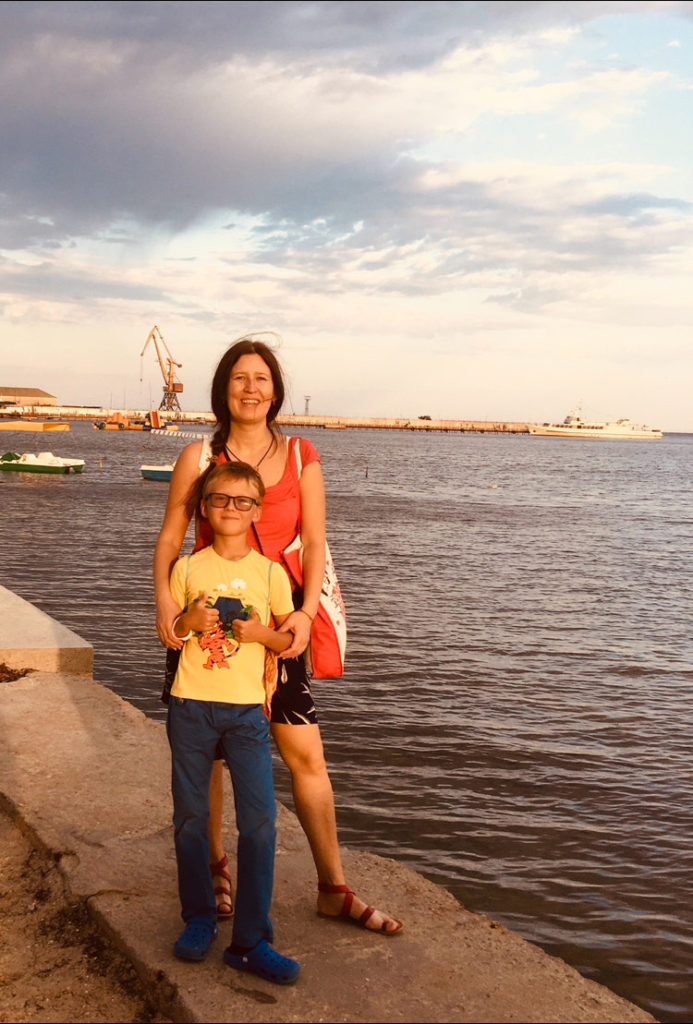
A moment of warmth preserved amidst the harsh reality of war.
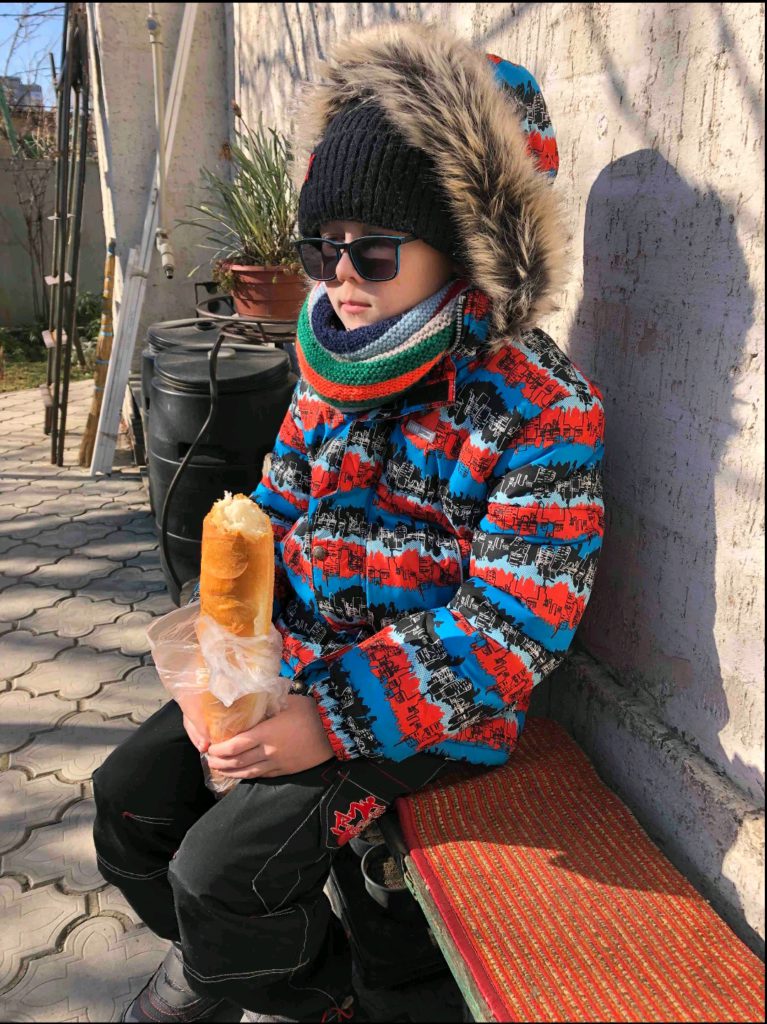
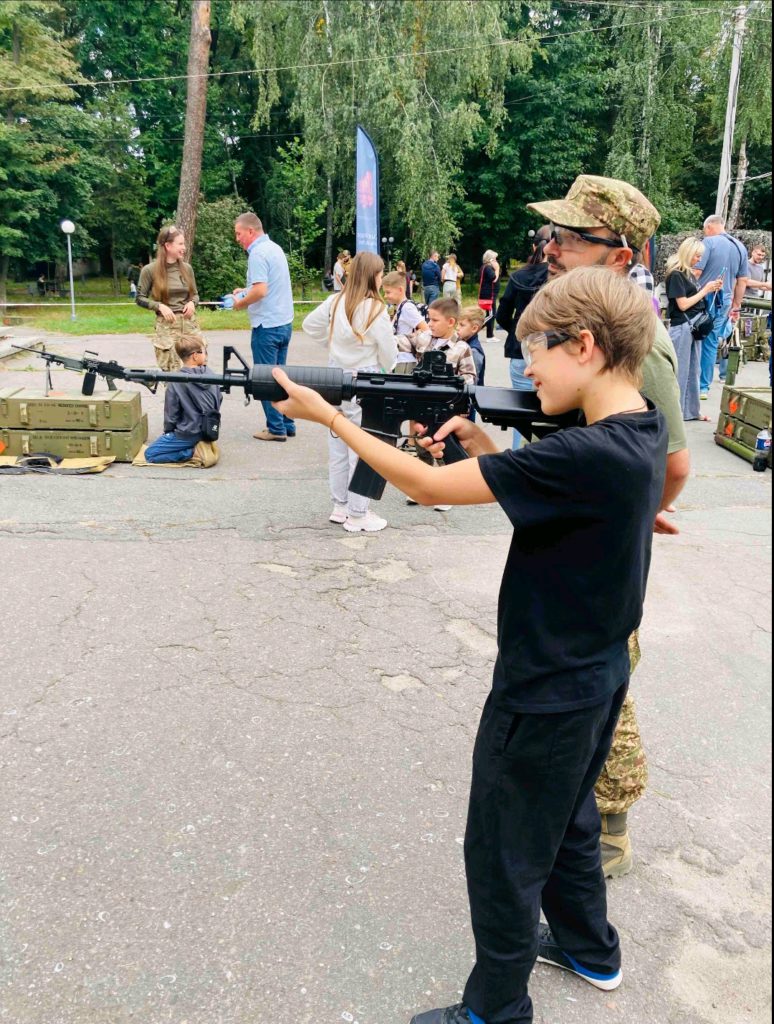
Children of war grow up faster than they should.
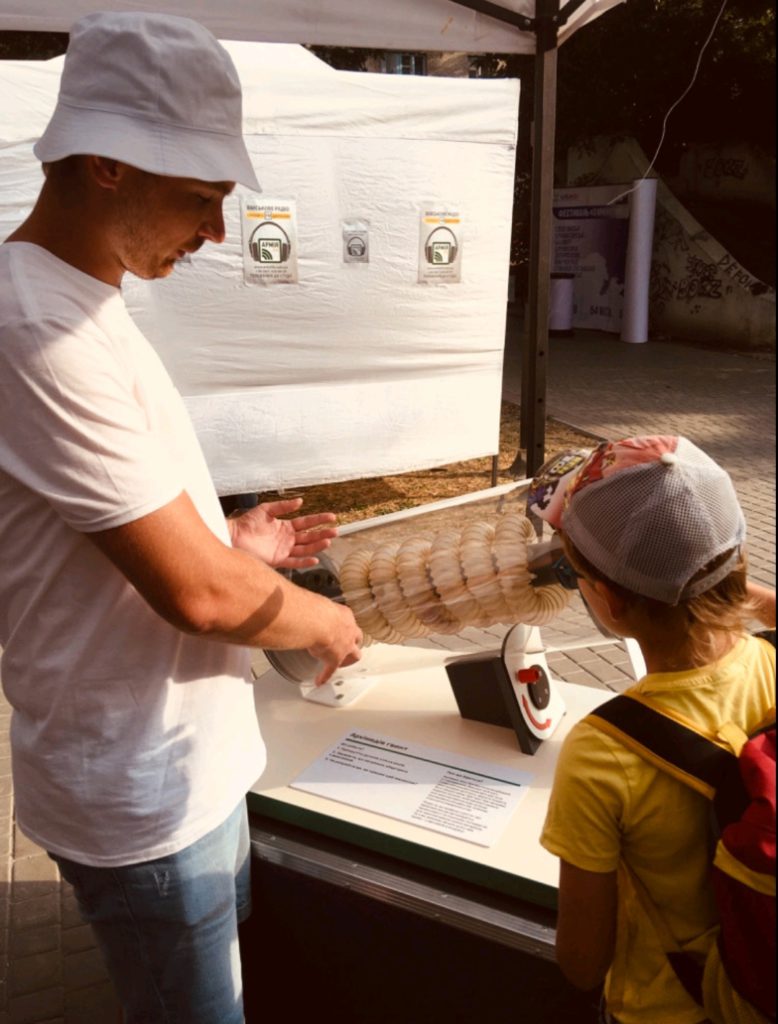
They met at a summer camp with a technical focus before Sashko started first grade. Petro was a camp counselor and immediately impressed Sashko with his sincerity and commitment to speaking Ukrainian in predominantly Russian-speaking Kherson. Later, he taught at Sashko’s school. After 2022, he became a combat medic and now serves in the Armed Forces of Ukraine.
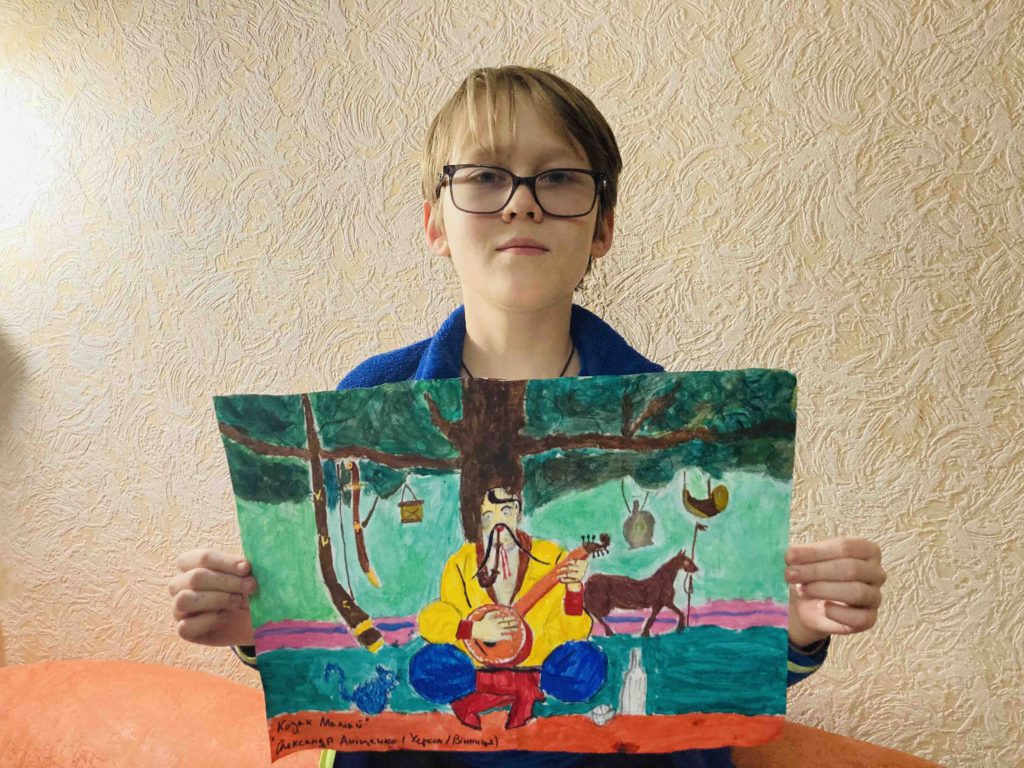
Despite the war, art remains his source of strength and hope.
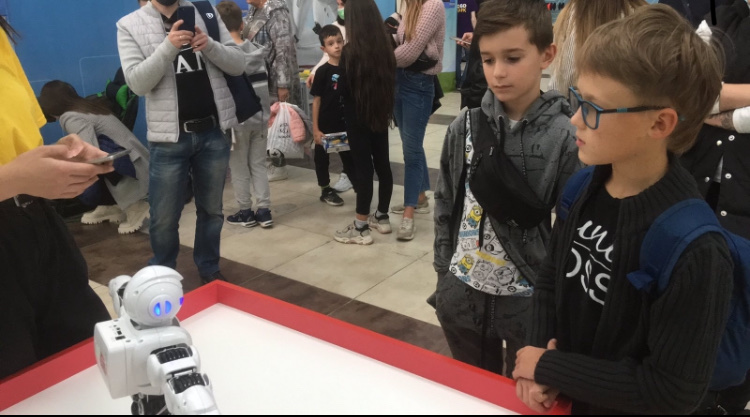
The boy had spent a long time in occupation with his parents. They now live in Canada.
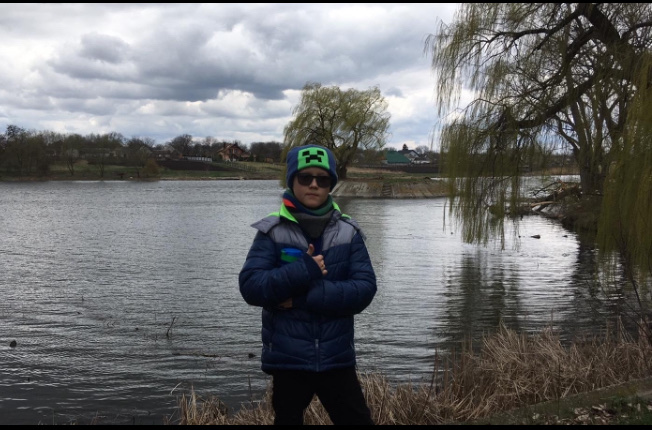
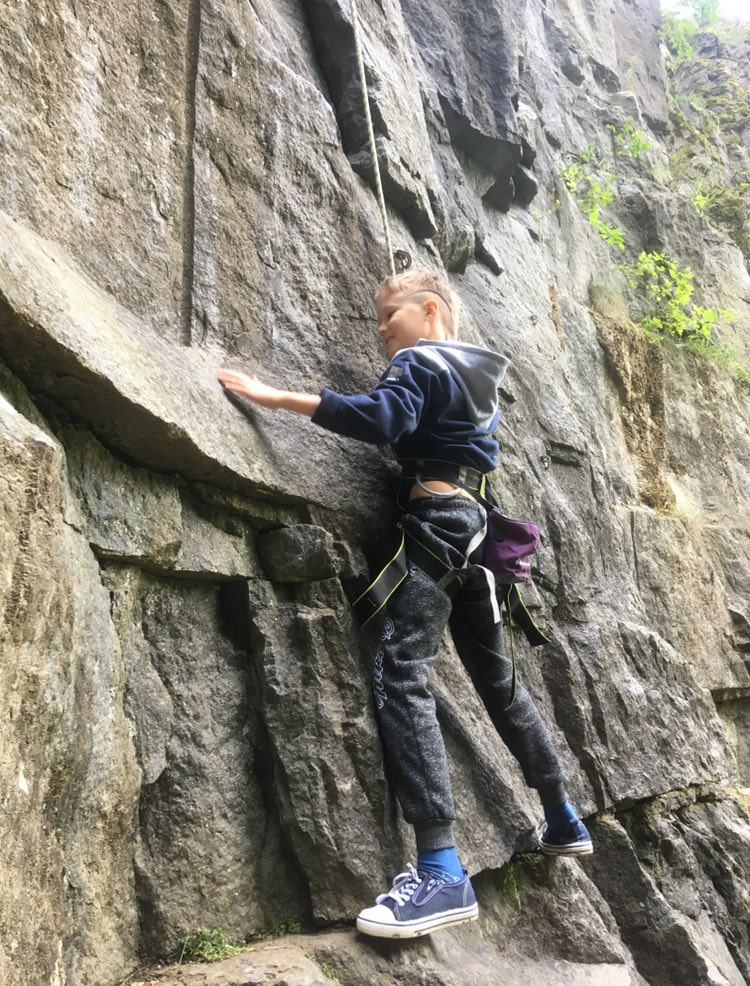
Even when it’s tough, he doesn’t stop — he climbs to the top.
The survey was conducted by the NGO “Network of Civil Society Organizations Supporting Internally Displaced Persons in Ukraine” with the support of the Askold and Dir Foundation, administered by ISAR Ednannia, within the project “Strong Civil Society of Ukraine as a Driver of Reforms and Democracy,” funded by Norway and Sweden. The content of this publication is the sole responsibility of the NGO “Network of Civil Society Organizations Supporting Internally Displaced Persons in Ukraine” and does not necessarily reflect the views of the governments of Norway or Sweden, or of ISAR Ednannia.